
The Importance of Proper Refrigeration for Food Safety
Written by Staff Writer

When you put groceries in the fridge, you probably focus on doing it as quickly as possible. Maybe you have an organizational system, or maybe you just pack items in wherever they fit.
Proper fridge storage keeps food safer for longer. Storage time, temperature and location all affect the spread and growth of bacteria and other harmful pathogens.
This rings true whether you are preparing meals at home or handling food in a professional kitchen. Perishable items like raw meat, poultry, seafood, eggs, dairy products, cut produce and leftovers all need cold, consistent storage.
The Right Refrigerator Temperature
Cold temperatures slow bacterial growth. Proper refrigeration is one of the simplest and most important safe storage habits.
What Temperature Should a Refrigerator Be?
According to U.S. Food and Drug Administration (FDA) guidelines, your fridge should stay at 40 degrees Fahrenheit or below. Your freezer should stay at 0 degrees Fahrenheit or below. If the fridge gets too warm, even by just a few degrees, bacteria can grow more quickly.
How to Monitor Your Fridge Temperature
Use an appliance thermometer to check the temperature often. Some refrigerators have built-in temperature displays, but a separate thermometer can help confirm the actual temperature inside the fridge.
Keep the thermometer near the center of the refrigerator instead of the door. The area near the door tends to be warmer than the rest of the fridge because warm air enters every time the door opens. Measuring the temperature there won’t give an accurate reading of the overall space.
When putting items in the fridge, avoid packing them in too tightly. Cold air needs space to move around containers and cool them effectively.
How to Organize Your Refrigerator
Though shelf order may not seem like a big deal, storing food in the wrong order can increase the risk of cross-contamination. That’s because juices or liquids from raw foods can drip onto foods stored near or below them. If affected foods aren’t cooked to a high enough temperature, harmful bacteria may survive and cause foodborne illness.
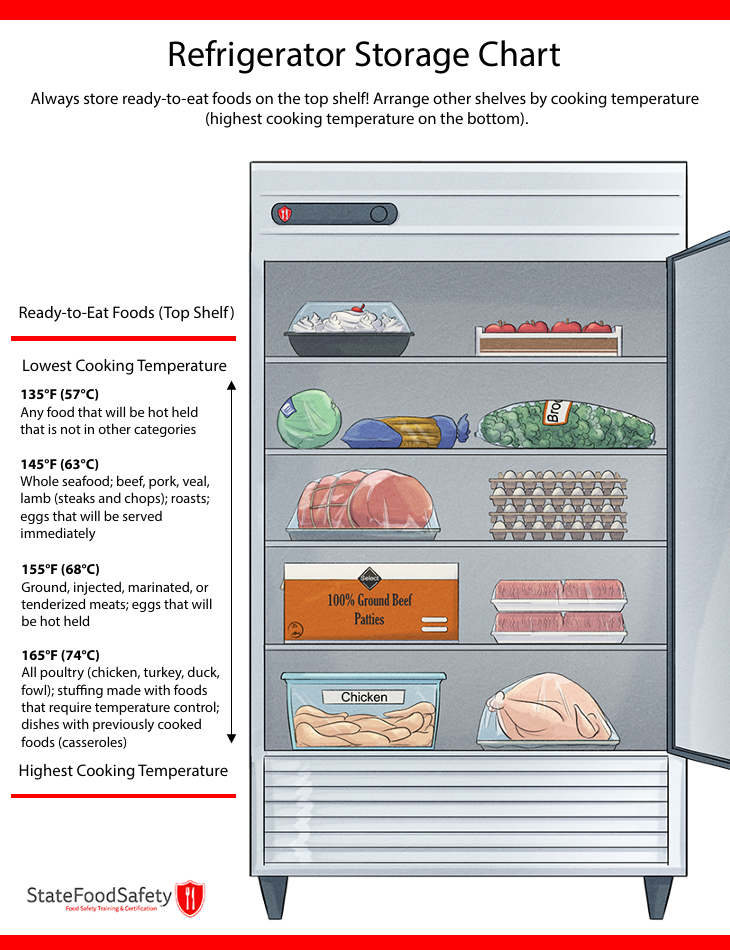
To reduce this risk, organize refrigerator shelves so that foods requiring the lowest cooking temperatures are stored at the top, with foods requiring the highest cooking temperatures found at the bottom. This keeps items that need the most cooking below those that need less cooking — or no cooking at all.
Top Shelf
The top shelf should be reserved for ready-to-eat foods. This means they will be served without being heated up.
This includes:
- Prepared salads
- Washed produce
- Desserts
- Cooked foods that are ready to serve
Since these foods will not undergo any further cooking, they need the most protection.
Second Shelf
The second shelf should hold items that will be hot-held and are not included in another cooking temperature category.
This may include cooked vegetables or commercially processed ready-to-eat products that will be reheated before serving.
Third Shelf
The third shelf is for products that must be cooked to a minimum temperature of 145 degrees Fahrenheit. This includes:
- Whole seafood
- Whole cuts of beef, pork, veal and lamb
- Roasts
- Whole eggs
Because many of these items are raw, they should be handled carefully and kept in packaging or containers that prevent leaks.
Fourth Shelf
The fourth shelf should hold products that need to be heated to at least 155 degrees Fahrenheit.
This includes meat that has been ground, injected or tenderized. These meats require careful handling and higher cooking temperatures than whole cuts because bacteria can spread throughout the food during the processing step. Eggs that will be hot-held after cooking also belong in this category.
Bottom Shelf
The bottom shelf should hold products with the highest required cooking temperatures. This category includes poultry, such as chicken, turkey and duck.
It also includes dishes that contain previously cooked foods, such as casseroles and stuffings.
Crisper Drawers and Compartments
Residential refrigerators often have crisper drawers and door compartments for specific types of food, such as meat and produce. These compartments help manage moisture, which can keep produce fresher for longer, and keep raw meat separated from other products.
Door compartments are convenient for smaller items, but keep in mind that they are usually the warmest part of the fridge. Use them for items that can handle temperature changes, such as condiments, salad dressings, jams, pickles and bottled drinks.
How Long Can Food Be Stored in the Fridge?
Use these sample refrigerator storage times as a general guide. Always follow package instructions indicating a shorter storage time.
- Up to 2 days: Ground beef, turkey, veal, pork and lamb, stew meats, whole chicken or turkey, giblets, raw or poultry sausage, fresh fish and shellfish.
- Up to 4 days: Egg dishes, soups and stews, casseroles, gravy, broth, chicken patties and nuggets, store-prepared meals and fully cooked ham slices.
- Up to 5 days: Egg, chicken, tuna, ham and macaroni salads, opened luncheon meats, canned ham labeled “Keep Refrigerated” and fully cooked ham halves.
- Up to 7 days: Bacon, smoked sausage links or patties, fully cooked whole ham and corned beef in brine.
- Up to 2 weeks: Unopened packages of hot dogs and lunch meat.
- Up to 3 weeks: Opened summer sausage packages and hard sausage, such as pepperoni.
To keep track of expiration dates and keep products from passing their safe storage windows, be sure to label them with their use-by date when they are first stored. When something is close to the end of its storage window, use it, freeze it or throw it out.
When in Doubt, Throw it Out
Before eating refrigerated food, check its smell, texture and appearance. If anything seems off, throw it away.
A sour or unpleasant smell, slimy texture, mold, leaking packaging, unusual discoloration or a swollen container can all be signs that food is no longer safe to eat. Never try to rinse or cook spoiled food to save it.
Some harmful bacteria don’t change the way food looks or smells. If you do not know how long something has been in the refrigerator, it is safer to discard it.
If the power goes out, try to keep the fridge doors closed as much as possible. After four hours without power, it’s safest to throw away any perishable foods inside.
Store it Safely from the Start
Proper refrigeration practices help set the tone for safer handling throughout the kitchen. When food is stored correctly from the beginning, it is easier to prevent avoidable risks and identify any item that should be used or thrown away.
StateFoodSafety’s online Food Handler course can help you build on these storage basics for continued safe handling through cooking and serving. Whether you work in a professional kitchen or just want to build better habits at home, this self-paced online course can help you connect safe storage, preparation, cooking and service practices to create delicious, safe meals.